
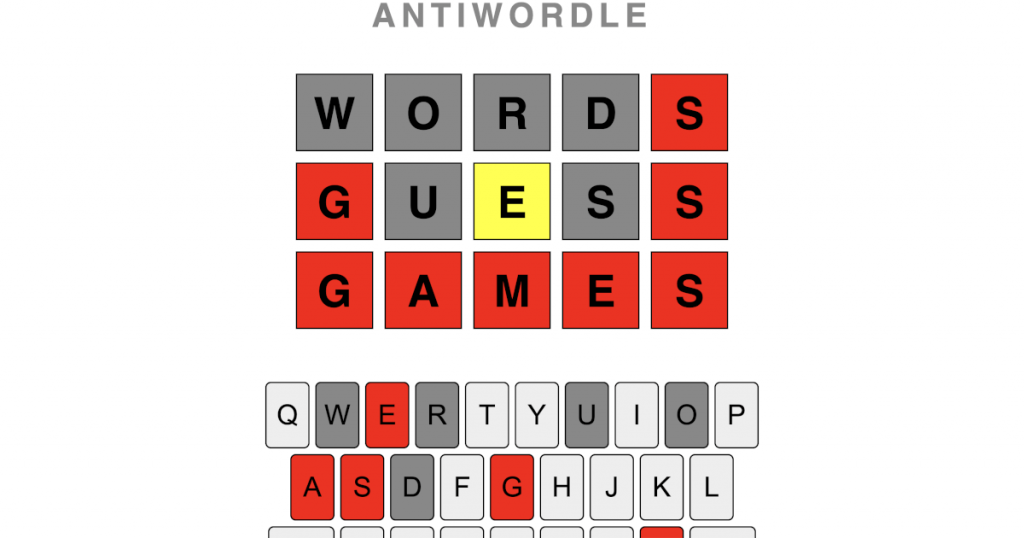
Okay, so I’m no Wordle champ—maybe intermediate—but I thought I’d give Antiwordle a whirl. And guess what? It messed me up. Daily.
What is Antiwordle, in Real Terms?
Think Wordle’s evil twin. You guess 5‑letter words. Feedback hides matching letters or positions—so if you accidentally guess the hidden word, you lose. Six tries max. If you outlast the game without identifying it, you win. (Feels backwards. I know.)
The Experience
Day 1: I guessed “apple.” Boom—lost.
Day 5: Learned that starting with rarer letters might help.
Day 10: Started avoiding my go‑to Wordle words.
Day 15: Couldn’t remember what success felt like in Wordle.
I began choosing awful words purposely (q‑rich or z‑heavy) so I wouldn’t accidentally guess it. It was kind of fun, watching yourself tip-toe around the word that is literally your objective. Sort of like a reverse hot potato.
Why I Like It
-
It’s a mood vacation. Some days, you don’t want to win. You just want to play dumb.
-
It’s short. Six (anti‑)guesses, done. Good for a quick mental stretch.
-
It’s unique. I haven’t found another game that focuses on not winning. That in itself is a selling point.
Why It’s Not for Everyone
-
It’s demoralizing. If you’re looking for uplifting “You got it!” moments, you’ll be spitting.
-
Repetitive after a while. The novelty fades. Might hold your attention for two weeks max.
Conclusion
Antiwordle is like a baffling sitcom plot twist. Sometimes weird, occasionally frustrating—but undeniably clever. It’s not a replacement for deeper word games—but for a daily dose of unconventional mental floss, it’s worth the few minutes.